Song credits - additional film music - songs that are not included in the official soundtrack list, but are playing in the movie.
Listen to full soundtrack songs (where available)
1.
 City, Country, City – War
[0:01′] The narrator talks about the transition in the 70s of the word “Black” in movie titles from its denotative meaning to a reference to Black identity and culture.
2.
Ol’ Man River (SHOW BOAT(1936)) – Paul Robeson & Elisabeth Welch[0:05′] The narrator speaks about tropes of Black people being recycled, taking as an example the musical Show Boat.
3.
Suzanne – Harry Belafonte[0:10′] The narrator talks about the collaborations between Dorothy Dandridge and Harry Belafonte, and the racism that followed them in their careers, starting with a shot from the movie Bright Road where he sings this song.
4.
My Lord What a Mornin’ – Harry Belafonte[0:10′] The narrator dives into Harry Belafonte’s training as an actor, his musical talent and unique presence on stage.
5.
Dis Flower – Georges Bizet & Herschel Burke Gilbert[0:11′] A shot from the movie Carmen Jones demonstrates the unease the establishment had with Belafonte’s singing voice, as he lip-syncs this song.
6.
My Baby’s Not Around – Harry Belafonte[0:11′] A scene from the movie Odds Against Tomorrow is played.
7.
Never Ending Melody – Charles Earland (feat. Freddie Hubbard & Joe Henderson)[0:15′] This song is played over footage of civil unrest of the 60’s as a response to the mistreatment of people of color. Director Charles Burnett reminisces about the Watts riots in LA.
8.
Blue Sophisticate – Marian McPartland[0:16′] The Indie scene of the time allowed Black actors more artistic freedom, away from the White gaze, but little recognition of their talent. A scene with Ivan Dixon and Abbey Lincoln in Nothing But A Man is shown.
9.
I Want to Be Wanted – Sammy Davis Jr.[0:17′] The narrator talks about Davis’s performance in A Man Called Adam, opening with him singing this song on stage in the movie.
10.
Cookie Jar – Reverend Barrington Stanley[0:19′] The narrator talks about Sydney Poitier’s success following the release of Guess Who’s Coming to Dinner and In the Heat of the Night.
11.
Sister Rosetta Tharpe – Up Above My Head[0:20′] The narrator questions why women rock pioneers didn’t get the opportunities of their white counterparts such as Elvis and The Beatles, in regard to movie careers.
12.
Bo Diddley – Bo Diddley[0:20′] The Duchess is another example of overlooked talent.
13.
If I’m In Luck I Might Get Picked Up – Betty Davis[0:20′] The last example of overlooked talent presented by the narrator.
14.
Privacy – Mirot[0:21′] The Night of The Living Dead is presented as an allegory to the riots happening in real life, with killings and boarded-up windows recreating Tv footage.
15.
Skid Row Joe – Orchestra Heinz Kiessling[0:24′] The narrator talks about the career of writer, director, and occasional actor Oscar Micheaux, and the political and financial circumstances that shaped it.
16.
Tweedy – Combo Fred Spannuth[0:25′] Fred Astaire’s servant persona is analyzed in interaction with the myth of African Americans presented at the time by the entertainment industry.
17.
Fusty Game – Ludovic Beier & Jean-Paul Jamot[0:26′] The narrator talks about the 1912 silent film A Fool and his Money, directed by Alice Guy Blaché, which stands out today for being the first film with an all-African American cast, and for conveying them in roles that are not degrading or stereotypical.
18.
All Right – Nineoneone[0:26′] The narrator outlines the underground economy and culture where Black indie filmmakers had to resort to ingenuity to find resources and audiences for their films. They are the precursors of today’s indie filmmakers, shaped more by marginalization than rebellion.
19.
Walk On By – Isaac Hayes[0:32′] Isaac Hayes was so inspired by Sergio Leone’s film Once Upon a Time In the West – the perversion of Henry Ford’s character, regarded as a stalwart of White decency, and Woody Strode’s performance – that he went on to create this piece.
20.
Black Enough – Melba Moore, Galt MacDermot[0:45′] The narrator shows Ossie Davis’s artistic vision in Cotton Come to Harlem, where Black pride is celebrated rather than seen as an inconvenience. This perspective is also visible in this song, which he wrote in collaboration with Galt MacDermot.
21. Shaft – Ultimate DJ Tools
[0:49′] The narrator focuses on the importance that soundtracks have in accompanying a film’s message, looking at Gordon Parks’ collaboration with Isaac Hayes for the movie Shaft.
22.
Betty’s Theme – Charles Earland[0:51′] The narrator talks about Sweet Sweetback’s Badasssss Song’s pursuit and hijacking of the X-rating, in defiance of the Motion Picture Association film rating system.
23.
Won’t Bleed Me – Melvin Van Peebles[0:54′] Further analysis of the film’s soundtrack, as this song is played over a scene in the film.
24.
Piano Nocturne – Marian McPartland[1:00′] The narrator details Rupert Crosse’s last year before he died of leukemia, as he was scheduled to take part in the film The Last Detail.
25.
Theme from Shaft – Isaac Hayes[1:00′] Isaac Hayes becomes the first Black Best Song winner in 1972 and goes all out in his performance at the 44th Academy Awards.
26.
Earthy – Brian Dee & Irving Martin[1:01′] The narrator focuses on what distinguishes Black film culture from the mainstream: a certain heroism and swagger portrayed by Black actors, who had never been allowed on screen before.
27.
Lady Sings the Blues – Diana Ross[1:02′] 1973 is a peak year for Black-led movies, as for the first time there are 2 Black women nominated for Best Actress – Diana Ross and Cicely Tyson.
28.
Baker ’56 – Chet Baker[1:05′] An introduction to actor Billy Dee Williams, and his handsomeness.
29.
Trouble Man – Marvin Gaye[1:11′] The narrator introduces the work of Marvin Gaye and the influence of his song “What’s Going On” on the soundtracks of Black films that came after.
30.
Pusherman – Curtis Mayfield[1:12′] Through the soundtrack of Super Fly, the narrator presents Curtis Mayfield’s career and lyricism as driven by the desire for social change and a militant attitude towards institutional inertia.
31.
Junkie Chase – Curtis Mayfield[1:14′] A chase scene from Super Fly is played with this song in the background.
32.
Transmograpfication – The J.B.’s & Fred Wesley[1:19′] The narrator dives into the significance, popularity, and controversy of Blaxploitation films.
33.
Incidental Backcloth (3) – Keith Mansfield[1:20′] The narrator discusses the role of the Black stars in these movies, as their Blackness became more visible, and Black audiences could relate to them.
34.
People Get Up and Drive Your Funky Soul – James Brown[1:21′] The narrator describes the evolution of Black films to a point where Black characters can inhabit central roles, the focus being on their conflicts and dilemmas, spurred by drug wars and crime.
35.
The Greatest Performance Of My Life – Nancy Wilson[1:26′] Stan Lathan reminisces how they assembled the lineup for Save The Children, as various clips of the artists from the concert play.
36.
To Be Invisible – Gladys Knight & The Pips[1:36′] This song, part of the soundtrack for Claudine and inspired by a fear common for Black people, is played over footage from the film.
37.
Rash – Orchestra Cometa[1:38′] A scene with Roscoe Orman’s performance in Willie Dynamite with Diana Ross.
38.
Delivery Date – Alan Hawkshaw[1:42′] The narrator analyzes Sydney Poitier’s performance in Uptown Saturday Night.
39.
Can’t Seem to Find Him – The Love Unlimited Orchestra[1:43′] The narrator highlights the passion and joy that Black performers brought into their work during this era and the way it transcends the screen to the audience.
40.
That’s the Way of the World – Earth, Wind & Fire[1:44′] The band is shown playing this song, as the narrator speaks about the film That’s the Way of the World –
it’s a powerful soundtrack and an undercooked script.
41.
Born In This Time (performed by Muddy Waters)[1:45′] The narrator talks about the film Mandingo, as this song plays over the introduction credits.
42.
Black Jesus – Ghostface Killah[1:47′] The moment a young Black man is shot by police in Cornbread, Earl and Me is accompanied by this song, as the narrator talks about the impact the film made at the time.
43.
Fingertips (Pt. 2) – Stevie Wonder[1:47′] The narrator talks about the coming-of-age story of Cooley High, infused with nostalgia due to the soundtrack of Motown songs.
44.
Rock ‘N’ Roll Choo Choo – Bloodstone[1:51′] A man plays this song in the movie Train Ride to Hollywood.
45.
Car Wash – Rose Royce[1:54′] The narrator talks about the film Car Wash.
46.
Something He Can Feel – Aretha Franklin[1:54′] The narrator talks about this song being written for the film Sparkle by Curtis Mayfield, as scenes from the movie are shown.
47.
The Bingo Long Song (Steal On Home) – William Goldstein & Thelma Houston[1:55′] A scene from the film The Bingo Long Traveling All-Stars & Motor Kings is shown, as the narrator analyzes another part of Black lives that it portrays.
48.
The Greatest Love of All – George Benson[1:57′] The narrator talks about the context in which the film The Greatest, about Muhammad Ali, appeared.
49.
The Greatest Love of All – Whitney Houston[1:57′] Whitney is shown singing this song, as the narrator describes how her cover of the song helped shift the public’s perception of the film for which the song was composed.
50.
Omaca – Sestetto Dino Piana & Oscar Valdambrini[1:57′] The narrator describes the changing importance of soundtracks through the years, and the way Black 70’s films elevated their significance and ability to sell a movie.
51.
Lialeh – Bernard Purdie[1:58′] The narrator showcases Purdie’s involvement in the making of the X-rated film Lialeh, as he is shown playing the score he composed in a scene in the film.
52.
Stayin’ Alive – Bee Gees[1:59′] The narrator observes how the cinematic legacy of Black movies finally becomes visible in a mainstream film, Saturday Night Fever.
53.
You Should Be Dancing – Bee Gees[2:00′] John Travolta is shown dancing at the disco in Saturday Night Fever, as the narrator ponders on the resemblance of his swagger to the performances pioneered by Black actors.
54.
Night Fever – Be Gees[2:00′] John Travolta dances in front of a mirror while preparing for a night out in Saturday Night Fever.
55.
This Bitter Earth – Dinah Washington[2:05′] An intimate scene from Killer of Sheep is shown, as the narrator delves into the long time it took to complete this film, and the inspiration it has provided to cinematography since. The tenderness of this song is noticed for the impact it confers on the scene.
56.
It’s So Hard to Say Goodbye to Yesterday – Boyz II Men[2:08′] In a scene from Cooley High, the narrator talks about the limitations of pride in comparison to the joy of one’s craft.
57.
Acque Azzure 2 – Alessandro Alessandroni[2:11′] End credits song
Trailer Video
Watch the trailer for this filmTrailer songs (full tracks)
Am I Black Enough For You? - Billy Paul Streaming on: Netflix
Category: Documentary Movie Soundtracks, Netflix
 What to Watch this Week |
  Top TV Series |
  Top Films |
  TV Series Schedule |
  In Theaters Now
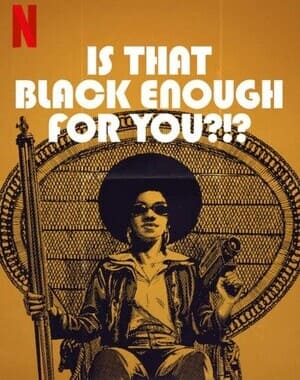
Movie Genre: Documentary
Release date (wide): 11 November 2022
Runtime: 2h 15m
Production: Makemake, Netflix
Distributor: Netflix
Director: Elvis Mitchell
Actors: Margaret Avery, Harry Belafonte, Charles Burnett
IMDB: Is That Black Enough for You?!?
 Composers Archive



The song title I’m looking for start with the ending credits.
It’s starts at the 3.33 minutes I